

Global take on media and advertising news
Provided by AGP
Music Reports Offers Claims-Based License Management as Industry Navigates DDEX Standard Migration
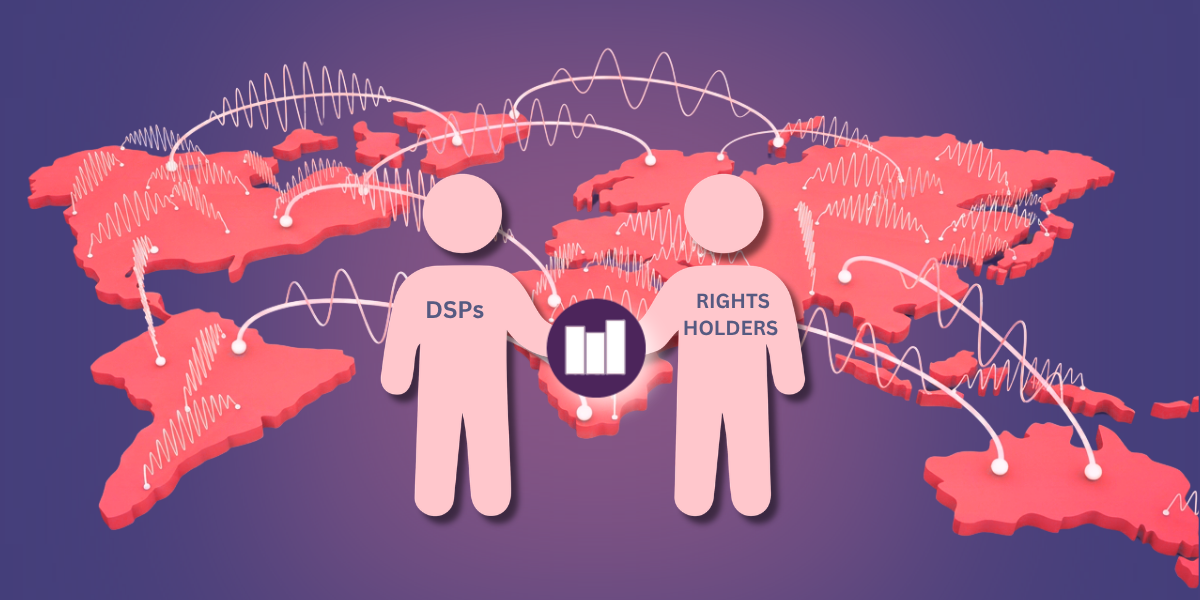
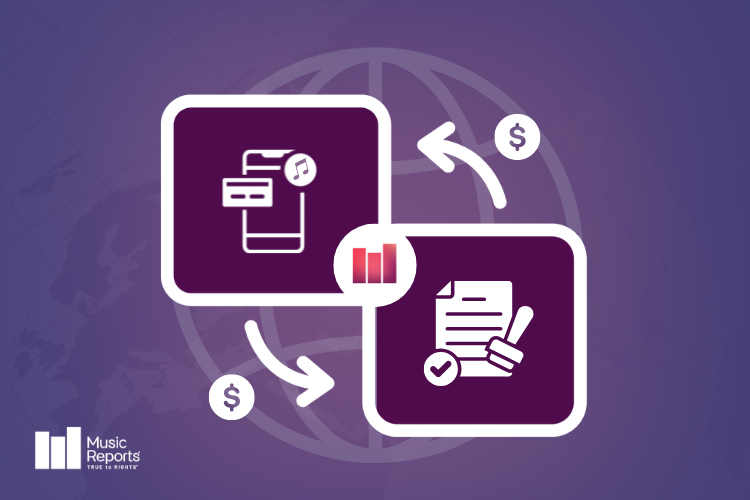
Music Reports offers claims-based license management spanning virtually every active music market, reducing friction and accelerating royalty payments globally.
LOS ANGELES, CA, UNITED STATES, May 24, 2026 /EINPresswire.com/ -- As digital streaming platforms (DSPs) continue to expand worldwide, rendering national borders irrelevant, the burden of managing publishing licenses has grown exponentially. Music Reports offers claims-based license management spanning virtually every active music market, serving as an infrastructure partner to stakeholders across the digital music space as the industry navigates growing complexity in global royalty administration.At the center of this system is the global framework built on standards created by Digital Data Exchange (DDEX) and the International Confederation of Societies of Authors and Composers (CISAC). These protocols underpin how usage and sales data flows from DSPs to publishers and collective management organizations (CMOs). It also impacts how claims and invoices are returned for payment. While this framework is widely adopted and highly constructive, the process is far from simple in practice.
So what is claims-based licensing? It's a publishing administration model where the licensee submits usage data and related sales details to each of its CMO licensors, who then respond by claiming the musical works they control and issuing invoices tied to those claims. At first blush this makes infinite sense, but in practice it means that one reports to many CMOs and those CMOs return many claims -- inevitably leading to double claims and overclaims of the same works. This creates friction and slows down the flow of royalty payments.
Even with these established standards in place from respected organizations, those standards inevitably evolve and players in the music industry can't always keep up with those changes, creating challenges to maintaining accurate reporting for rights holders.
Music Reports addresses this friction by working with both sides of this exchange. For DSP clients, the company ingests large-scale usage and sales data, transforms it into DDEX Digital Sales Reports (DSRs), and distributes it to CMOs worldwide in the preferred versions of the standard. While Music Reports is an active member of DDEX and a supporter of its standards, in practice, each CMO may require slightly different variants of these standards or have its own delivery specifications which can change from time to time. Music Reports supports all of these variants through rapid data transformation, acting as a universal adapter so any DSP can connect to any CMO, reducing complexity in the reporting process.
Once those DSR files are processed, CMOs return claims in the form of Claim Confirmation and Invoice Details (CCID) files. Music Reports first validates their calculations to confirm that per-play rates being claimed align with the contractual and reporting expectations. It then reconciles these CMOs' claims against one another to ensure accuracy and prevent duplicate payments, particularly in cases where multiple CMOs may assert rights over the same share of a given composition in the same period and territory.
This reconciliation layer is critical. Without it, DSPs risk overpaying due to conflicting claims, incorrect calculations, or increasingly, outright fraud. These checks must be managed across a huge number of files. For example, a DSP with eight licensors in just the European Union will have to send at least 27 DSR files (even if they all use the same version of the DSR standard), but will receive at least 216 CCID files in return. This complex challenge multiplies further when services operate multiple tiers, such as ad-supported and subscription models, since each tier requires separate reporting and validation workflows. The huge volume of all of this data has real and growing costs of transmission, processing, and storage.
In parallel, Music Reports also supports rights holders directly, especially in markets where infrastructure gaps persist. In certain regions, including parts of the Middle East and some former Soviet states, publishers and smaller CMOs may lack the technical capacity to process sales files and generate responsive claims files. In these cases, Music Reports processes incoming DSR data files from DSPs, generates CCIDs and invoices on behalf of rights holders, and delivers simple, transparent reporting outputs these rights holders can use in their downstream reports to songwriters.
This dual-sided capability allows DSPs to maintain consistency across both mature and developing markets, while ensuring rights holders can participate in global royalty flows regardless of technical limitations.
Since expanding beyond its US-focused roots in the mid-2010s, Music Reports has built a cloud-based system designed to handle high-volume data exchange at scale. Its infrastructure integrates with major global licensing organizations like SOLAR, DEAL, PEDL, and ARESA, as well as leading CMOs (SACEM, APRA/AMCOS, etc.) to form part of the operational backbone of the international global publishing rights administration ecosystem.
The company is also preparing for the next evolution of data standards. DDEX members are on the cusp of migrating from the aging CCID standard to a modern replacement known as Claim Detail Message (CDM). Music Reports is already aligned with these developments, maintaining compatibility with all standards in use globally so as to maintain reporting compatibility for rights and royalty administration across an evolving global network of CMOs and other rights organizations.
For DSPs, license management at global scale is not just about compliance. It requires carefully balancing data complexity, cost, and risk, while keeping infrastructure costs from diverting development resources away from growth.
Likewise, when publishers and CMOs have to develop, host, and maintain redundant infrastructure to process ever-changing claims standards, those costs come directly out of distributions to their members. That infrastructure cost is amortized across many users, with all standards managed simultaneously.
Bill Colitre
Music Reports
email us here
Legal Disclaimer:
EIN Presswire provides this news content "as is" without warranty of any kind. We do not accept any responsibility or liability for the accuracy, content, images, videos, licenses, completeness, legality, or reliability of the information contained in this article. If you have any complaints or copyright issues related to this article, kindly contact the author above.
