

Lightening Products for Dark Area Market to Reach US$ 10.3 Bn by 2035, Expanding at 7.8% CAGR – TMR Analysis
Lightening Products for Dark Area Market
Global market driven by rising intimate skincare awareness, clinical innovation, and strong growth in Asia Pacific through 2035.
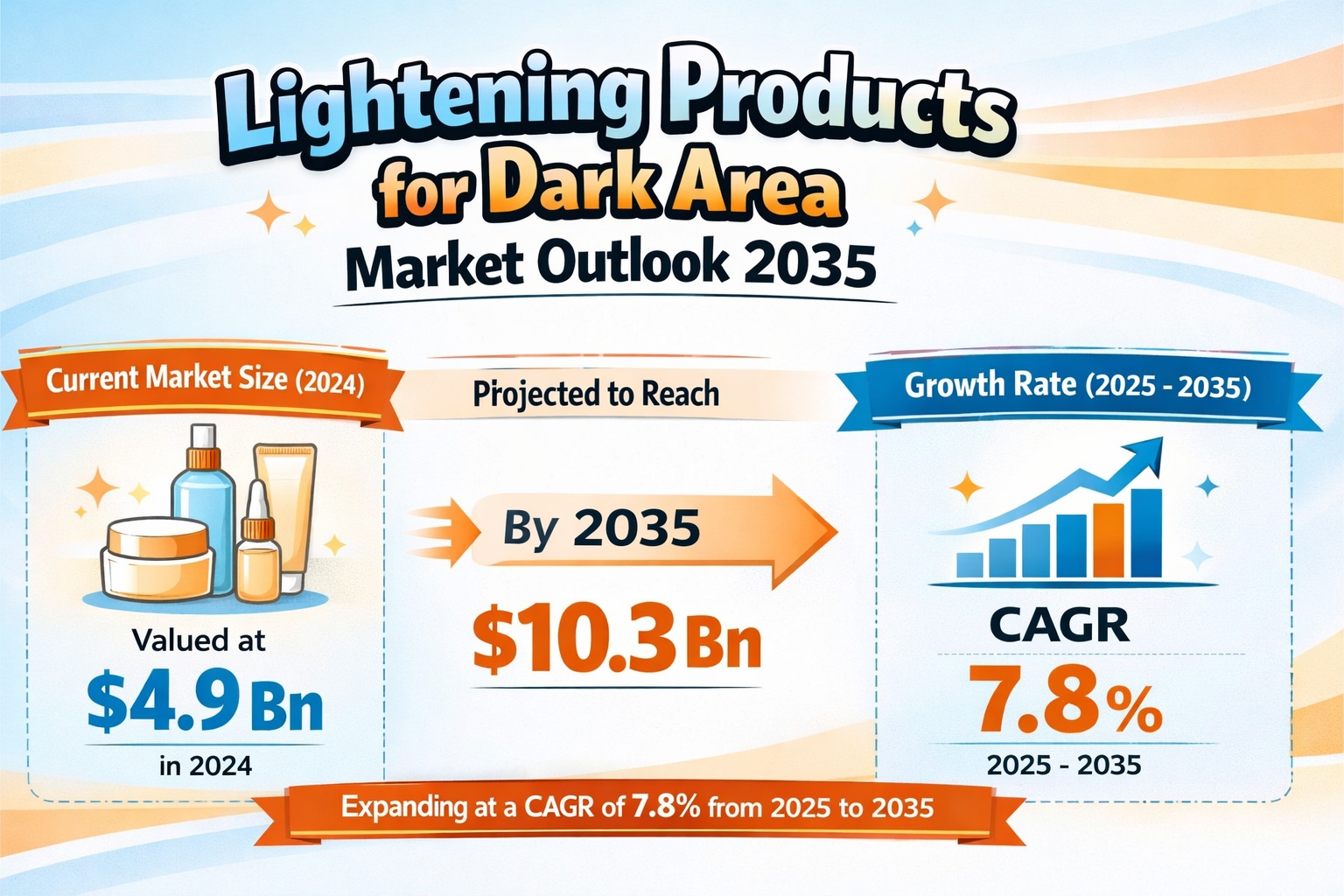
WILMINGTON, DE, UNITED STATES, February 26, 2026 /EINPresswire.com/ -- Lightening Products for Dark Area MarketThe global Lightening Products for Dark Area Market was valued at US$ 4.9 Billion in 2024 and is projected to reach US$ 10.3 Billion by 2035, expanding at a compound annual growth rate (CAGR) of 7.8% from 2025 to 2035.
Explore core findings and critical insights from our Report in this sample –
https://www.transparencymarketresearch.com/sample/sample.php?flag=S&rep_id=86902
This steady expansion reflects the increasing normalization of body pigmentation care, particularly for underarms, inner thighs, knees, elbows, neck, and intimate areas. As consumers become more educated about hyperpigmentation causes such as friction, hormonal fluctuations, shaving, aging, and sun exposure, demand for targeted tone-correction products continues to grow globally.
Asia Pacific dominated the market in 2024, accounting for 47.3% of total revenue, supported by strong skincare culture, advanced manufacturing infrastructure, and expanding middle-class populations. By product type, creams and lotions led with a 38.5% market share, owing to their versatility, affordability, and dermatological acceptance.
Market Overview
Lightening products for dark areas include cosmetic and dermo-cosmetic formulations designed to reduce localized hyperpigmentation while maintaining skin barrier integrity. Unlike facial brightening products, these solutions are typically formulated with gentler active ingredients and moisturizing components to ensure suitability for sensitive body areas.
Common product formats include:
• Serums
• Creams & lotions
• Gels
• Oils
• Masks
• Soaps and other formats
Key active ingredients frequently used in formulations include niacinamide, kojic acid, alpha arbutin, vitamin C derivatives, lactic acid, licorice extract, botanical oils, and tranexamic acid.
The market consists of over-the-counter cosmetic products, dermatologist-recommended formulations, and clinic-distributed post-procedure solutions. Distribution spans pharmacies, supermarkets, specialty stores, aesthetic clinics, and e-commerce platforms.
A notable shift in the industry has been the movement from price-driven competition to differentiation based on:
• Ingredient transparency
• Dermatological testing
• Fragrance-free and hypoallergenic claims
• Regulatory compliance
• Clinical partnerships
Moreover, consumer demographics are evolving. While women remain the primary buyers, urban male consumers are increasingly entering the segment, particularly in Asia Pacific, North America, and Europe.
Key Market Growth Drivers
1. Rising Consumer Awareness of Intimate Skin Aesthetics
Growing awareness regarding intimate and body skincare aesthetics is a major growth driver. Educational efforts from dermatology bodies such as the American Academy of Dermatology have helped normalize conversations around non-facial hyperpigmentation.
According to dermatological consultations cited in the industry, over 35% of adults aged 20–40 seeking skin consultations report concerns beyond facial pigmentation, including underarms and inner thighs.
This increased visibility has reduced stigma and accelerated product adoption. Manufacturers are responding by launching dedicated intimate-care ranges backed by dermatologist and gynecologist testing, strengthening consumer trust.
2. Increasing Spa, Salon, and Aesthetic Clinic Treatments
Professional aesthetic services are significantly influencing consumer purchasing behavior. Body treatments now represent nearly 30% of global spa menus, according to industry associations such as the International Spa Association.
Non-invasive treatments like chemical peels, laser toning, and skin rejuvenation procedures are often paired with topical maintenance products. Dermatology clinics and medical aesthetic centers frequently retail post-procedure pigmentation-correction products to extend clinical outcomes.
Brands including L'Oréal Groupe and Galderma actively highlight clinical partnerships and dermatologist-tested formulations, reinforcing product credibility.
3. Ingredient Innovation and Clean Beauty Trends
Consumers increasingly demand:
• Plant-based actives
• Fragrance-free formulations
• Alcohol-free solutions
• Cruelty-free and sustainable packaging
Brands are investing in R&D to develop safer alternatives to harsh bleaching agents, focusing on gradual tone improvement and skin barrier protection.
4. Expansion of Male Grooming Segment
Male consumers are increasingly investing in specialized body care. Urban professionals, particularly in Asia Pacific and Latin America, are embracing targeted underarm and intimate-area products, contributing incremental revenue growth.
Analysis of Key Players – Competitive Landscape & Strategies
The market features both multinational corporations and niche dermatology-focused brands. Key players include:
• Paula's Choice
• 7 Days Organic.
• Beauty Elements Ventures Inc.
• Beiersdorf
• Buddha Naturals
• Civant
• Estée Lauder Inc.
• Fixderma India Pvt. Ltd.
• Garnier LLC
• Honasa Consumer Limited (Dr. Sheth's)
• Sneira
• The Procter & Gamble Company (Olay)
• Unilever Plc (Dove)
• Other Key Players
Get a concise overview of key insights from our Report in this sample –
https://www.transparencymarketresearch.com/sample/sample.php?flag=S&rep_id=86902
Key Player Strategies
1. Dermatological Validation & Clinical Backing
Leading companies emphasize clinical testing, safety documentation, and partnerships with dermatologists to enhance credibility.
2. Portfolio Diversification
Major players are expanding product portfolios to include serums, roll-ons, and spray serums tailored for underarms and intimate areas.
3. Emerging Market Penetration
Asia Pacific remains a priority growth hub. Localized formulations and pricing strategies are being implemented to capture expanding middle-class consumers.
4. E-commerce & D2C Expansion
Online platforms and company-owned websites are increasingly vital for consumer education and global distribution.
5. Clean Label & Ingredient Transparency
Clear ingredient disclosure and safety certifications are becoming competitive differentiators.
Market Challenges & Opportunities
Challenges
1. Regulatory Scrutiny
Skin lightening products face ethical and regulatory oversight, particularly regarding ingredient claims and advertising messaging.
2. Consumer Sensitivity Concerns
Products used on intimate areas must avoid irritation, creating formulation challenges.
3. Ethical Debate on Skin Lightening
Cultural and social concerns about skin-tone messaging require careful marketing positioning focused on tone correction rather than whitening.
4. Fragmented Competition
Numerous local brands compete aggressively on price in developing markets.
Opportunities
1. Medical Aesthetic Integration
Partnerships with dermatology clinics create premium product positioning.
2. Men’s Grooming Expansion
Growing male adoption opens new product lines.
3. Organic & Natural Segment Growth
Natural/organic products are gaining traction among sensitive-skin consumers.
4. Rising Disposable Income in Asia Pacific & Latin America
Expanding middle-class populations support sustained growth.
Recent Developments
• In November 2025, FEMM Parlour opened in New York City, focusing on addressing intimate-health concerns that patients said were often dismissed in traditional care settings.
• In June 2025, L’Oréal Groupe announced that it had agreed to acquire maximum stake in British skincare brand Medik8.
• In March 2025, as global beauty preferences moved toward clean innovation and sensorial self-care, Lotus Botanicals launched LuminaFresh Underarm Spray Serum. The non-aerosol, alcohol-free formulation combined underarm brightening with odor control.
Investment Landscape and ROI Outlook
The Lightening Products for Dark Area Market presents strong mid- to long-term investment potential, supported by:
• Predictable CAGR of 7.8%
• Expanding dermatology-clinic retail model
• Growth in online distribution channels
• Premiumization of intimate care products
Investors are increasingly targeting brands with:
• Strong regulatory compliance frameworks
• Scientifically backed claims
• Clean beauty positioning
• Emerging market penetration
Asia Pacific offers the highest ROI potential due to large population bases and entrenched skincare culture. Meanwhile, North America and Europe provide premium segment opportunities driven by clinical endorsements and sustainability trends.
Private equity interest is rising, particularly in niche dermatology-focused brands and D2C startups.
Market Segmentation
By Product Type
• Serums
• Creams & Lotions
• Gels
• Oils
• Masks
• Others (Soap, etc.)
By Nature
• Natural/Organic
• Conventional
By Target Body Area
• Underarms
• Inner Thighs
• Intimate Area & Buttocks
• Knees & Elbows
• Neck
By Gender
• Women
• Men
By Packaging Format
• Tubes
• Bottles
• Droppers
• Roll-ons
• Jars
• Others (Sachets, etc.)
By Distribution Channel
Online
• Company Owned Website
• E-commerce Platforms
Offline
• Supermarkets/Hypermarkets
• Specialty Stores
• Department Stores
• Pharmacies/Drugstores
• Convenience Stores
• Independent Stores
By Region
• North America (U.S., Canada)
• Europe (U.K., Germany, France, Italy, Spain, The Netherlands)
• Asia Pacific (China, India, Japan, South Korea, Australia, ASEAN)
• Middle East & Africa (GCC Countries, South Africa)
• Latin America (Brazil, Mexico, Argentina)
Why Buy This Report?
• Comprehensive market valuation from 2020–2035
• Detailed segmentation analysis
• Competitive landscape with revenue share analysis
• SWOT and Porter’s Five Forces assessment
• Regulatory and compliance insights
• Investment opportunity mapping
• Strategic recommendations for market entry and expansion
• Regional price and supplier analysis
• Market player competition dashboard
This report serves manufacturers, investors, distributors, cosmetic brands, private equity firms, dermatology clinics, and regulatory consultants seeking actionable intelligence.
Buy this Premium Research Report for a deep dive into essential data –
https://www.transparencymarketresearch.com/checkout.php?rep_id=86902<ype=S
Frequently Asked Questions
1. What is the projected growth rate of the Lightening Products for Dark Area Market?
The market is projected to grow at a CAGR of 7.8% from 2025 to 2035.
2. Which region dominates the market?
Asia Pacific leads the market, accounting for 47.3% of global revenue in 2024.
3. Which product type holds the largest share?
Creams and lotions dominate the segment with 38.5% market share in 2024.
4. What are the main growth drivers?
Key drivers include rising awareness of intimate skincare, increasing aesthetic clinic treatments, ingredient innovation, and expansion of male grooming.
5. Who are the key players in the market?
Major players include Estée Lauder Inc., Unilever Plc (Dove), The Procter & Gamble Company (Olay), Beiersdorf, Garnier LLC, Paula’s Choice, Civant, and others.
Browse More Trending Research Reports:
Sports Medicine Device Market - https://www.transparencymarketresearch.com/sports-medicine-device-market.html
Organic Sports Supplement Market - https://www.transparencymarketresearch.com/organic-sports-supplement-market.html
Activewear Market - https://www.transparencymarketresearch.com/activewear-market.html
Athletic Footwear Market - https://www.transparencymarketresearch.com/athletic-footwear-market.html
About Transparency Market Research
Transparency Market Research, a global market research company registered at Wilmington, Delaware, United States, provides custom research and consulting services. Our exclusive blend of quantitative forecasting and trends analysis provides forward-looking insights for thousands of decision makers. Our experienced team of Analysts, Researchers, and Consultants use proprietary data sources and various tools & techniques to gather and analyses information.
Our data repository is continuously updated and revised by a team of research experts, so that it always reflects the latest trends and information. With a broad research and analysis capability, Transparency Market Research employs rigorous primary and secondary research techniques in developing distinctive data sets and research material for business reports.
Contact:
Transparency Market Research Inc.
CORPORATE HEADQUARTER DOWNTOWN,
1000 N. West Street,
Suite 1200, Wilmington, Delaware 19801 USA
Tel: +1-518-618-1030
USA – Canada Toll Free: 866-552-3453
Website: https://www.transparencymarketresearch.com
Email: sales@transparencymarketresearch.com
Abhishek Budholiya - Marketing Team
Transparency Market Research Inc.
+1 518-618-1030
email us here
Legal Disclaimer:
EIN Presswire provides this news content "as is" without warranty of any kind. We do not accept any responsibility or liability for the accuracy, content, images, videos, licenses, completeness, legality, or reliability of the information contained in this article. If you have any complaints or copyright issues related to this article, kindly contact the author above.
