

Victoryfr Outlines a Layered Nano Approach for High-Filled Low-Smoke Polymer Compounds

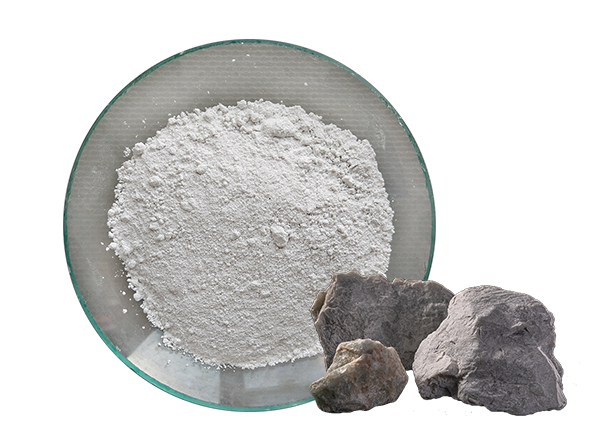
Guidance focuses on nano synergy in high-filled EVA, PE and PP compounds.
WA, UNITED STATES, September 30, 2026 /EINPresswire.com/ -- High-filled flame-retardant compounds can solve one problem and create another.Adding more mineral flame retardant may help a compound meet its fire-performance target. It can also make the material harder to process. Dispersion may become uneven. Extrusion pressure can rise. Flexibility or elongation may fall.
Victoryfr has published new technical guidance on where layered nano flame-retardant materials may fit into these formulations.
The guidance is aimed at cable compounders and polymer manufacturers working with EVA, PE and PP systems.
When More Mineral Filler Is Not the Answer
Mineral flame retardants such as magnesium hydroxide are widely used in halogen-free and low-smoke polymer compounds.
They often need to be used at relatively high levels.
That becomes more difficult when a formulation already has enough flame-retardant filler but still shows poor dispersion, rough extrusion or weaker mechanical properties.
In that situation, simply increasing the mineral level may make processing worse.
The new Victoryfr guidance looks instead at whether a smaller amount of a functional nano material can work with the existing flame-retardant system.
What a Layered Nano Material Does
Layered nano materials are not necessarily a replacement for magnesium hydroxide.
They can be used as part of the same system.
Their layered structure can contribute to the barrier that forms when a polymer burns. In some formulations, the material can also influence how the main flame-retardant filler is distributed through the polymer.
But particle size alone does not determine whether the material will work.
Nano particles have a high surface area and can form agglomerates. If they do not disperse properly, the expected benefit can be lost.
This makes surface treatment and resin compatibility important parts of material selection.
Victoryfr's existing technical materials describe layered nano flame-retardant products for polymer modification and halogen-free systems. They also cover surface modification and formulation adjustment for EVA, PE and PP.
EVA, PE and PP Do Not Behave the Same Way
A formulation that works in EVA cannot simply be copied into PE or PP.
In a highly filled EVA compound, dispersion and elongation may become the main concerns.
With PE cable compounds, filler distribution can show up in the extrusion surface. Agglomerates or an unsuitable particle distribution may leave a rougher finish.
PP brings a different balance. Impact strength, stiffness and the existing additive package all affect the result.
That is why Victoryfr's formulation work looks at more than the nano material itself. Resin type, filler level, surface treatment and dosage are considered together.
The company's earlier technical guidance for high-filled polymers follows the same principle: a nano additive should be tested as part of the formulation, not selected only because it is described as “nano.”
What to Check in a Trial
A useful trial compares the existing compound with the modified formulation under the same processing conditions.
The evaluation can include:
●filler distribution and visible agglomeration;
●extrusion pressure or torque;
●finished surface quality;
●flame-performance results;
●tensile, elongation or impact properties;
●stability after heat exposure.
No single result tells the whole story.
For a production compound, the practical target is a formulation that can meet its fire requirements without making extrusion or mechanical performance difficult to control.
Where Victoryfr Fits
Victoryfr supplies magnesium hydroxide and other halogen-free flame-retardant materials for polymer applications.
Its technical support includes particle-size selection, surface modification, dosage and compound-formulation adjustment.
This gives compounders another route when a standard high-filled mineral formulation begins to run into dispersion or processing limits.
For an EVA, PE or PP compound already using MDH, a layered nano material can be tested alongside the existing mineral system rather than treated as a separate replacement technology.
The final formulation still needs to be checked with the customer's own resin, equipment and production conditions.
About Victoryfr
Victoryfr develops and supplies halogen-free flame-retardant materials and ultrafine non-metallic mineral products.
Its materials are used in applications including wire and cable, plastics, rubber and coatings. The company also works with particle-size control, surface modification and formulation support for different polymer systems.
Victoryfr's magnesium hydroxide product information lists HFFR and cable jacketing and insulation among its application areas.
Victoryfr
Liaoning Victory Flame Retardant Materials Technology Co., L
+86 16642501993
info@tiancifr.com
Visit us on social media:
Facebook
YouTube
Legal Disclaimer:
EIN Presswire provides this news content "as is" without warranty of any kind. We do not accept any responsibility or liability for the accuracy, content, images, videos, licenses, completeness, legality, or reliability of the information contained in this article. If you have any complaints or copyright issues related to this article, kindly contact the author above.
