

Tribeca Dental Studio Publishes Comparison of Braces, Lingual Braces and Invisalign
News originally published by
EIN Presswire
Dr. Nina Izhaky, founder of Tribeca Dental Studio
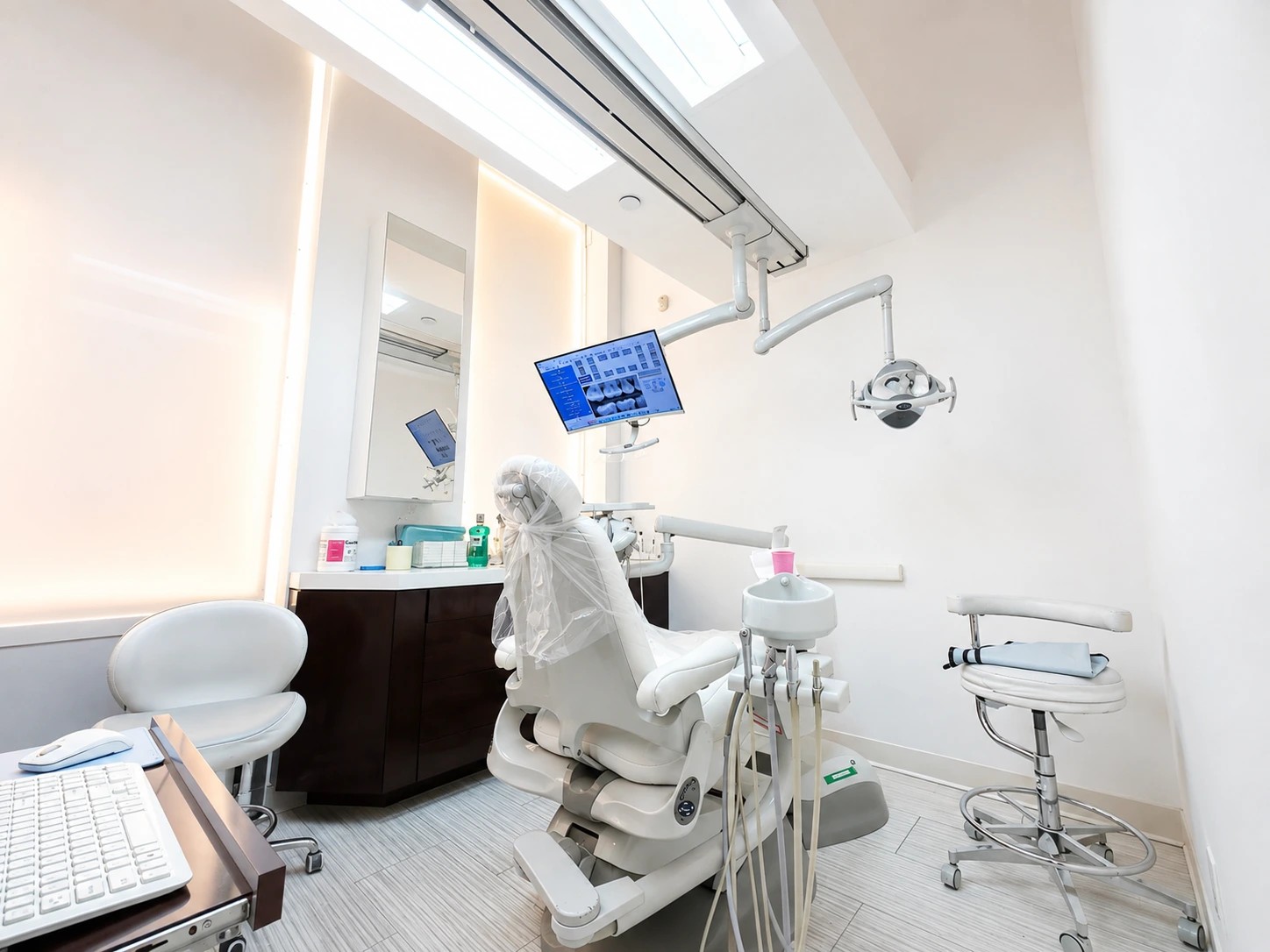
Tribeca Dental Studio operatory
Fixed braces give the most control, lingual braces hide it behind the teeth, and Invisalign removes it entirely — the patient's case and habits decide.
NEW YORK, NY, UNITED STATES, November 14, 2026 /EINPresswire.com/ -- "Which is better — braces or Invisalign?" is the question orthodontists hear most, and it has no honest universal answer. There are three established ways to move teeth — traditional braces, lingual braces, and Invisalign clear aligners — and each is the best choice for a different patient. Tribeca Dental Studio, whose orthodontic care is provided in-house, has published its comparison of the three: what each does well, where each falls short, and the factors that actually decide between them.
Traditional braces — brackets and wires fixed to the front of the teeth — remain the benchmark for control. Because the appliance is fixed and works around the clock, it handles the widest range of movements: severe crowding, large rotations, teeth that must be moved vertically, and bite correction in complex cases. It asks nothing of the patient's discipline, which is why it is often the reliable choice for younger teens. Its costs are visibility, harder cleaning around brackets, food restrictions, and breakage when those restrictions are ignored.
Lingual braces are fixed to the tongue side of the teeth, where the appliance is invisible in ordinary conversation. The lingual system used at Tribeca Dental Studio is Brius: instead of brackets joined by one continuous wire, each tooth carries its own small, custom device, designed from the patient's 3D plan, so teeth move independently and simultaneously rather than in sequence — the mechanics of fixed braces, engineered per tooth. For an adult whose case needs fixed-appliance control but whose work — presenting, performing, being photographed — rules out visible braces, lingual treatment delivers the control without the appearance. The trade-offs are real: the tongue needs time to adapt and speech is affected at first, cleaning takes more care, fewer orthodontists offer lingual treatment, and the cost is the highest of the three.
Invisalign moves teeth with a series of clear, removable aligners. It is the least visible option of all in daily life — and it comes out for eating, so there are no food restrictions, and for brushing and flossing, so hygiene is the easiest of the three. Office visits are typically fewer and shorter. Its limitation is the mirror image of braces' strength: an aligner in a pocket moves nothing. Treatment depends on wearing the trays 20 to 22 hours a day, every day; some complex movements remain harder to achieve with aligners alone; and lost trays and forgotten wear are the most common reasons Invisalign cases run long.
Which is better therefore depends on the patient in front of the orthodontist: the movements the case requires — mild alignment or a full bite correction; the patient's life — whether visible appliances are a genuine obstacle; the patient's habits — whether a removable appliance will actually be worn; and oral hygiene, which fixed appliances test hardest. At Tribeca Dental Studio the choice follows an orthodontic evaluation with 3D imaging, and the recommendation is the appliance that fits the case and the person — including, where relevant, how the orthodontic plan interacts with the patient's airway and bite, which the practice evaluates as part of its airway-focused care.
"Patients arrive having already chosen, usually from an advertisement," said Dr. Nina Izhaky, founder of Tribeca Dental Studio. "Our job is to slow that down. If your case is complex, fixed braces will do what aligners cannot. If you cannot be seen in braces, lingual — Brius, in our office — gives you that control invisibly. If you are disciplined and your case suits it, Invisalign is the easiest treatment to live with. The appliance is not the treatment. The diagnosis is."
Tribeca Dental Studio is a comprehensive dental practice at 54 Warren Street in Tribeca, New York, founded in 2007. The practice provides oral surgery, dental implants, orthodontics, laser dentistry, airway and sleep care, and family dentistry for adults, together with a dedicated pediatric practice for children, including sedation and special-needs care.
Tribeca Dental Studio, 54 Warren Street, New York, NY 10007 — https://tribecadentalstudio.com
Nina Izhaky
Tribeca Dental Studio
+1 212-561-5303
Legal Disclaimer:
EIN Presswire provides this news content "as is" without warranty of any kind. We do not accept any responsibility or liability for the accuracy, content, images, videos, licenses, completeness, legality, or reliability of the information contained in this article. If you have any complaints or copyright issues related to this article, kindly contact the author above.
